

I assume this Kimsnot card is meant to be a fake Kingston SD card, although it appears to steal more of the visual design from a SanDisk Extreme card. This SD card was sadly used to photograph a wedding, and unsurprisingly to us, only the first 16GB of photographs are readable. The rest are lost forever, because the other 112GB just doesn’t exist. The card reports 128GB of useable space, but anything above 16GB gets written into thin air. You don’t even get an error until you try to read back the files later. We’ve seen all sorts of fake capacity storage, and despite clearing them out every once in a while, Amazon and eBay are back selling them again. And just in time for all the new cameras, phones, and computers people will be getting for Christmas!
See our previous post about these fakes in 2016!
How to Spot Fakes
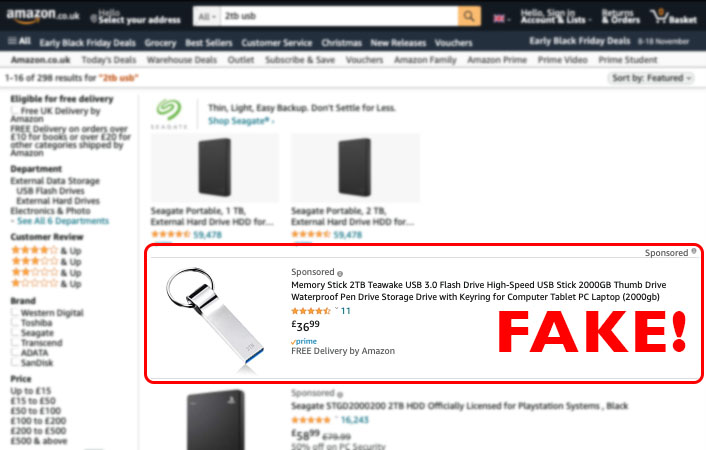
- Fakes are usually sponsored listings, so look for the sponsored tag.
- Fakes are usually cheaper than everything else, but not always
- Fakes can be brands you’ve never heard of. Making storage devices is expensive business, so you’ve probably heard of the genuine companies.
- Spelling or specification mistakes.
- Buy from trusted sellers only. You’re less likely to buy a fake card from Argos, John Lewis, Currys, or even a supermarket!
- The fakes usually work to a point, but with worse performance, and not to the full capacity. Try to fully test the device across the whole storage before you trust it. Fakes commonly have 32GB or less real storage, so make sure to test writing & reading above that size.
How bad is it?
I’ve just this second run a few searches, and get fake products as the first result. In the case of ebay, it’s the top result of 1,522, and appears directly above a genuine hard drive.

Leave a Reply