
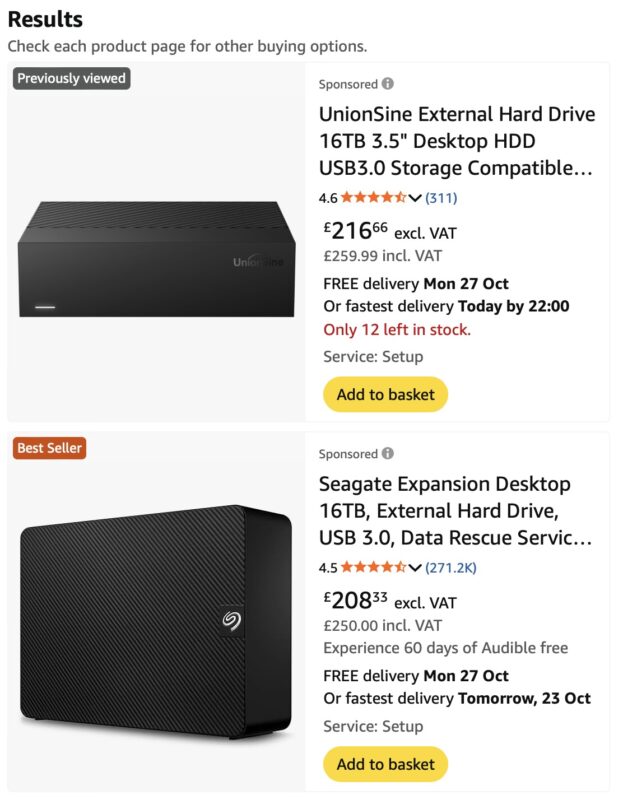
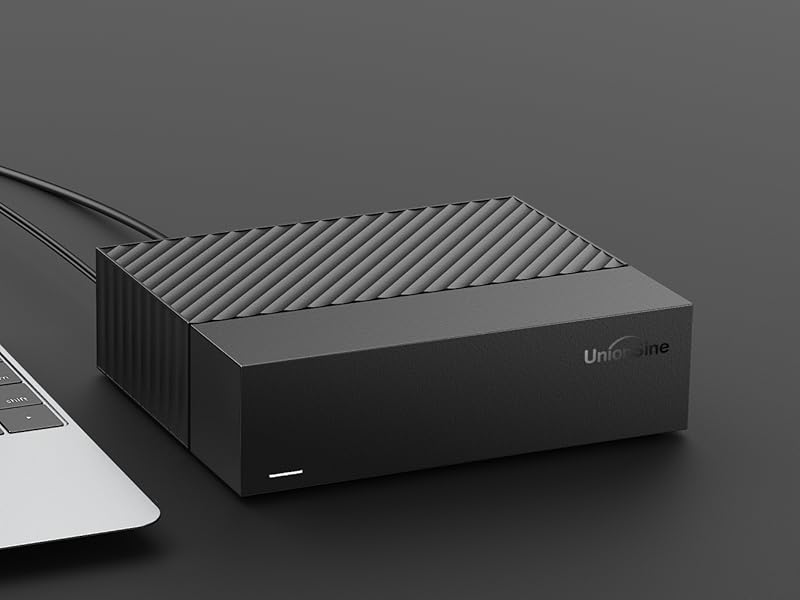
If you search for external hard drives on Amazon, you’ll see a vast selection of disks, with little more than price as a differentiator. Some of those are from established manufacturers, but others have curious1 names and very little reputation. What’s concerning is that we’ve found recertified (AKA, Used) drives being sold inside some of these supposedly new drives.
If you put an old motor in a new car, is it still a new car?
You might think buying used drives is OK, but recertified drives are usually marked in some way, and come with a lower cost. Then it’s up to you if you’d like to make the trade-off.
Quote from serverpartdeals.com
Emphasis mine.
- SMART Data and Power-On Hours
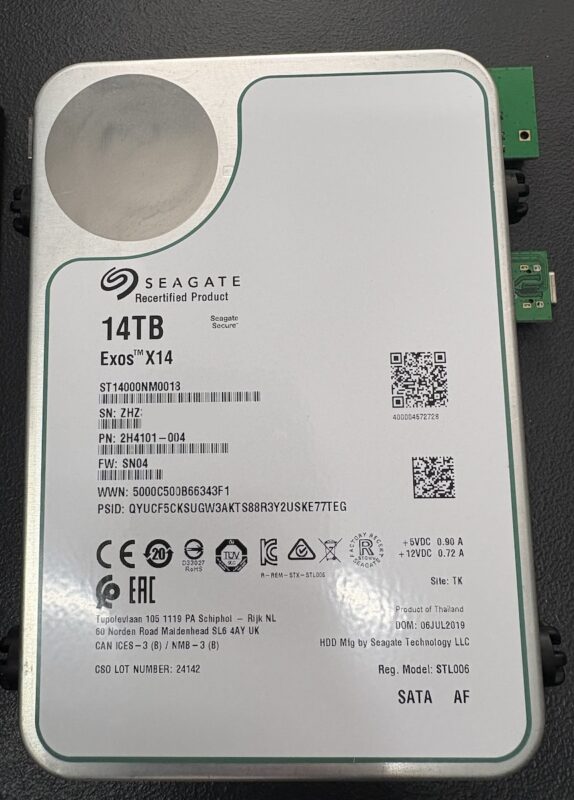
Both new and recertified drives have minimal SMART data and power-on hours. For Recertified drives, this is due to the Manufacturers wiping the SMART data during the recertification process. Meaning any previous data, if there was any, will be gone forever. Before our testing process, ALL Recertified drives will come to us with zero power on hours and zero power cycles.- Labelling: Recertified drives are clearly marked to indicate their status: Seagate: Uses a different label that prominently denotes the drive as recertified. Toshiba and Western Digital: Provides smaller indicators of recertification, with small text on the regular label
So that’s all well and good, Seagate kindly put a big green stripe around the edge of their recertified labels. The problem is, when you put that recertified drive into a black plastic case, you can no longer see the label.
Due to some unknown Amazon economics, when I checked today, the recertified drive actually costs more than the equivalent one from the disk manufacturer itself. Who knows if the Seagate one also contains a recert drive too? (- I’ll let you know when I see inside one)
As if there wasn’t enough to worry about buying storage, you now have to wonder if your brand new disk has been used before.
Buyer Beware!
Footnotes
- Ai generated? UnionSine, ezekers, Meyritech, ModusTech, fanxiang ↩︎
Leave a Reply